Article
Cultural heritage plays a key role in total defence concept
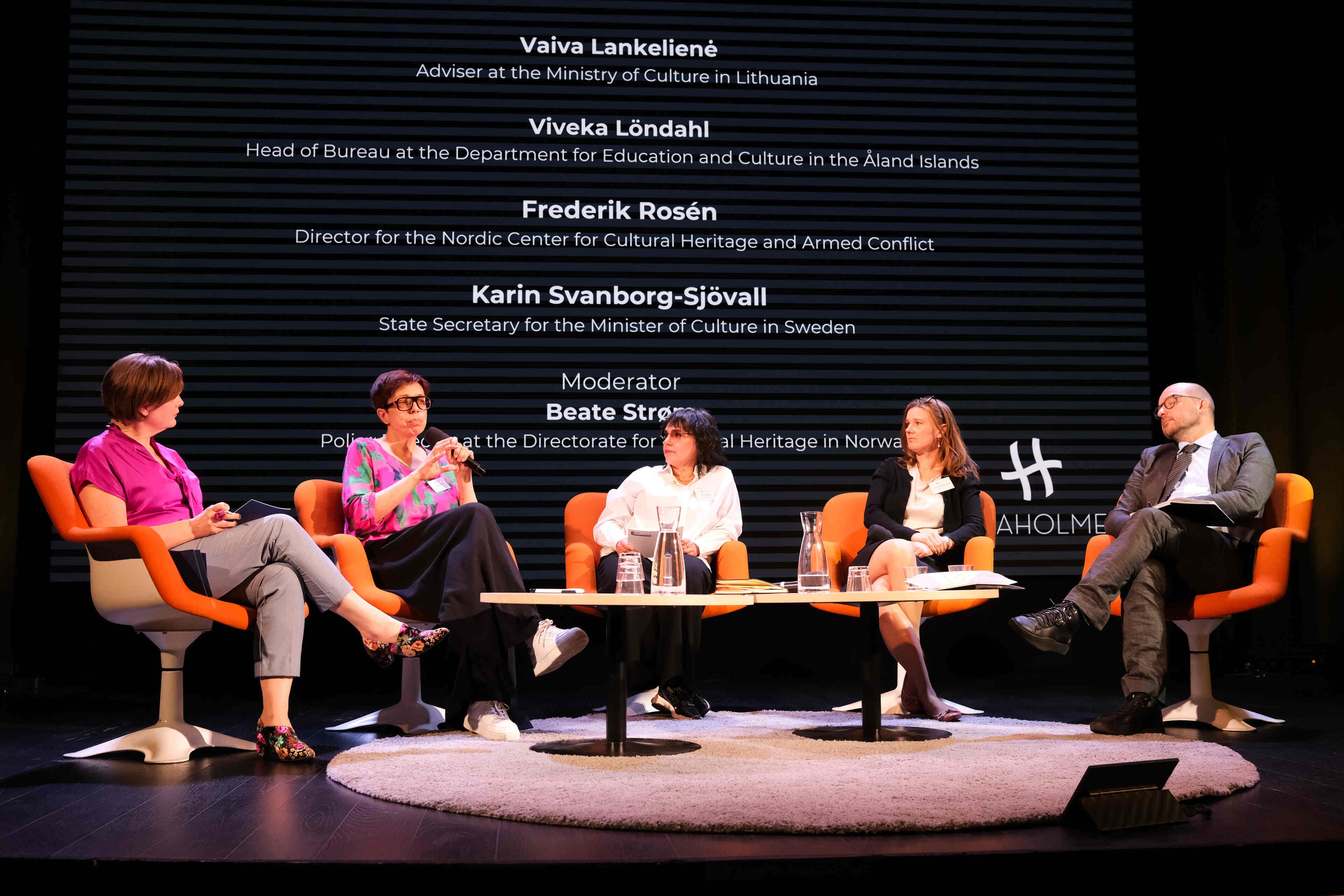
Experts in the Nordic and Baltic region are strengthening the preparedness and resilience of the cultural sector due to the dangerous situation in Europe. The Hanaholmen Heritage Conference is a concrete example of the proactive steps being taken.
“Our cultural heritage is worth fighting for. It is something that can protect us, not just something to be protected,” says Beate Strøm, policy director at the Directorate for Cultural Heritage in Norway.
The value of cultural heritage became widely recognised during the horrors of World War II, culminating in the 1954 Hague Convention for the Protection of Cultural Property in the Event of Armed Conflict. In the long post-war era many in Europe actively addressed the threats of climate change and natural disasters to cultural heritage, but the threat of military conflict was relatively neglected.
“In February 2022 Russia’s full-scale invasion of Ukraine began and we realised the world was not how we wished it were,” Strøm continues. “We have grown up in safe societies but now we need to acknowledge that yes, it really could happen here.”
Cultural heritage a strength during crisis
Within months, Nordic and Baltic countries began revisiting and strengthening their total defence strategies. This concept stresses that national defence is not the sole responsibility of the military, but a societal function shared by government, companies, civil institutions and the public. Culture and cultural institutions play a vital role in this doctrine, as they can provide psychological defence and social cohesion as well as promote civil-military cooperation.
“It is really a question of existence. If you lose your culture you lose your identity,” says Rosa Merilainen, secretary general of the Central Organization for Finnish Culture and Arts Associations KULTA.
She points out how cultural heritage can be a great asset and tool for resistance during conflict, citing when the Soviet Union invaded Finland in 1939 as an example.
“Culture absolutely played a role in the defence of Finland during the Winter War,” she says. “The spirit of the Winter War is an example of cultural heritage protecting society and participating in national defence. A key point is that the Spirit of the Winter War was not created during the war; it was created in the years beforehand.”
Nordic and Baltic cooperation critical
Yet cultural heritage is also vulnerable. Archaeological sites can disappear under rising seas, while extreme weather events could damage irreplaceable art and literature. In times of war, cultural heritage is a target.
“The Russian invasion of Ukraine didn’t end with attacking cultural sites; it began by attacking cultural sites,” says Karin Svanborg-Sjövall, state secretary to the Minister for Culture in Sweden. “Now we are waking up to this threat and the value of cultural heritage preparedness. For the first time the protection of cultural heritage has been put in Sweden’s national security strategy. Not many EU states do this.”
The Nordic and Baltic countries have accelerated cooperation, sharing best practices, ideas and experiences, as well as developing joint plans and training. Some of the lessons learned from mitigating the threats of climate change or extreme weather can also be used to counter military threats.
“Cooperation is extremely important, particularly in this geopolitical environment when you need to know who your true allies are,” says Svanborg-Sjövall. “We have made major strides forward, but we still have so much to do. I hope to see more formalised Nordic cooperation and tangible, concrete actions so we can measure progress.”
About Hanaholmen Heritage
In May 2024, the Ministers for Culture in the Nordic and Baltic states issued a declaration, stressing the need for intensified contingency planning to secure and protect cultural heritage and maintain cultural activities in the event of crisis. As part of this process, the Hanaholmen Heritage Training Programme and Conference brought together experts to exchange knowledge and experiences to strengthen the Nordic and Baltic preparedness of the cultural sector. Learn more here.
You can see some of the participants discuss the Hanaholmen Heritage Training Programme here.
Text: David J. Cord