Article
Work begins to strengthen cultural resilience and preparedness in Nordic and Baltic region
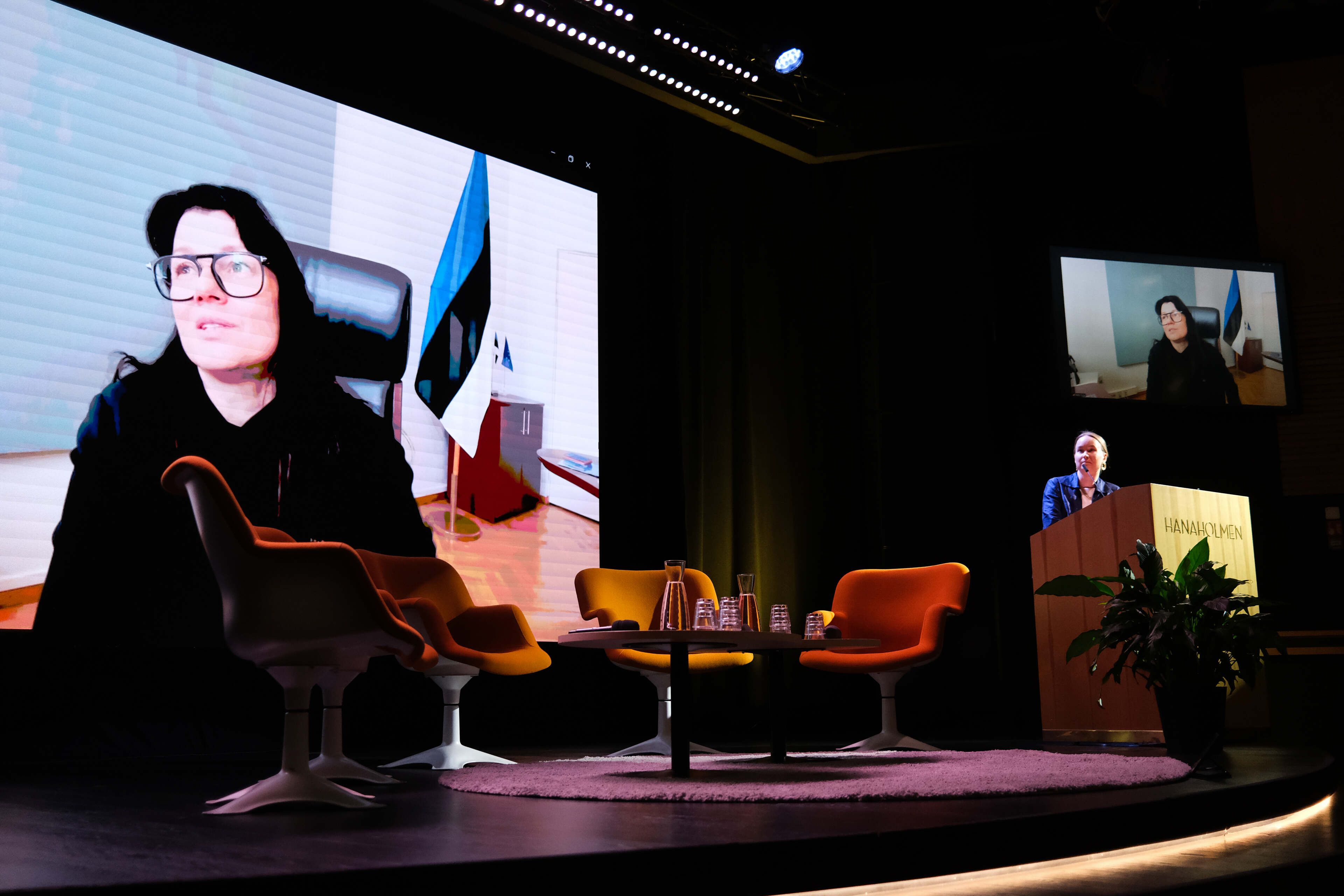
Cultural experts met at the Hanaholmen Heritage Conference to meet the threats of climate change, natural disasters, and hybrid and conventional military aggression.
The Hanaholmen Heritage Conference was the culmination of an important project to strengthen cultural heritage preparedness in the Baltic and Nordic region. On 28 May experts gathered to share best practices, exchange experiences and make plans of action.
“In times of crisis, the first priority is to save lives, followed by critical infrastructure like power and water,” explains Rúnar Leifsson, director general of the Cultural Heritage Agency of Iceland. “Preparedness has traditionally been aimed at natural disasters in Iceland, but that is changing now.”
The Hague Convention for the Protection of Cultural Property in the Event of Armed Conflict provides a framework to safeguard cultural property in war, yet it has not been universally implemented. Many participants at the conference discussed how their countries were progressing, such as with the blue shield emblem on sites and liaisons with the military or other groups. Volunteers can play a vital role, as pointed out by Leifsson.
“We rely heavily upon ICE SAR, which are volunteer rescue units who are well-trained and well-equipped,” Leifsson says. “They are embedded in local communities but can coordinate nationally. These volunteers are essential, the foundation of Icelandic response.”
Ukraine’s inspiring example
Attendees at the conference met peers from around the world to learn how others approach preparing cultural heritage for threats, such as climate change adaptation in Scotland and domestic unrest in India. Oksana Barshynova, deputy director general for exhibitions at the National Art Museum of Ukraine, explained what happened to her institution when it was attacked.
“The war has demonstrated how even major institutions may be unprepared for crises of such scale, not only technically but conceptually as well,” says Barshynova. “I would like conference participants to learn not only about our losses and challenges, but also practical responses – what has worked, what has not, how museums adapt under conditions of constant danger, and how cultural heritage becomes part of a broader conversation about responsibility and the resilience of society.”
Practical advice given
Heidy Purga, the minister of culture for Estonia, presented the Estonian model for cultural heritage preparedness.
“For Estonia, protecting cultural heritage in times of crisis is a strategic priority,” she says. “The national security concept gives a clear division of defence tasks, which is to guarantee that the state can function in times of peace, crisis or war. The defence tasks of the Ministry of Culture are in the ‘social cohesion and resilience of the state’ category.”
Estonia has been productive in the activities of cultural heritage preparedness in recent years. Purga explained the training, exercises, purchasing of transport crates and signing an agreement with a host country in the event of armed conflict.
Purga says learning from each other’s knowledge and experience supports countries when developing their own plans. Coordinated cooperation would bring results faster, more effectively and cost-efficiently. She also gave practical tips, such as explaining Estonia’s assessment criteria, scoring system and weighting factors to make priority lists of cultural property items.
“It is better to start small and get done quickly than debating for years. War doesn’t wait, as we know,” Purga says.
Recommendations and to-do lists developed
The participants of the training programme, which was held several weeks previously at Hanaholmen, agree. Based upon their work, Hanaholmen has formulated a set of recommendations which was presented at the conference:
- Recognise cultural heritage as critical infrastructure and integrate it into total defence and preparedness structures.
- Strengthen and operationalise the Nordic-Baltic Declaration, particularly with practical and operational elements related to preparedness, crisis response and the protection of cultural heritage.
- Establish a Nordic-Baltic working group to develop a common framework for regional cooperation and mutual assistance, such as communication channels, sharing of resources and evacuation procedures.
- Enhance digitalisation of cultural heritage, including the establishment of shared cloud-based services.
- Joint exercises and training.
Purga closed her presentation by addressing the whole reason for cultural heritage preparedness.
“If you want peace, prepare for war,” she says. “This does not mean living in constant fear of war. No: it means being so well prepared, so ready, so confident that no one dares to test you.”
About Hanaholmen Heritage
In May 2024, the Ministers for Culture in the Nordic and Baltic states issued a declaration, stressing the need for intensified contingency planning to secure and protect cultural heritage and maintain cultural activities in the event of crisis. As part of this process, the Hanaholmen Heritage Training Programme and Conference brought together experts to exchange knowledge and experiences to strengthen the Nordic and Baltic preparedness of the cultural sector. Learn more here.
You can watch the Hanaholmen Heritage Conference here.
Text: David J. Cord